GSA SER Global Site List
Understanding the Power of the GSA SER Global Site List
GSA Search Engine Ranker remains one of the most aggressive and versatile automated link-building tools available. At the heart of every successful campaign lies a robust, well-maintained GSA SER global site list. This collection of target URLs determines the platforms your software will interact with, directly influencing submission speed, verification rates, and link diversity. Without a high-quality list, even the best-configured project will waste resources on dead domains or platforms that no longer accept user-generated content.
What Exactly Is the Global Site List?
The GSA SER global site list is a master database of website URLs categorized by platform type. Unlike project-specific lists that target a single niche, a global list acts as a universal engine repository. It contains pre-identified footprints of platforms where backlinks can be created, including but not limited to:
- Article directories and guestbook pages
- Social bookmarking and microblogging sites
- Wiki and documentation platforms
- Web 2.0 property creation engines
- Forum profiles and comment sections
- Image galleries, video directories, and indexers
Lists typically come in two flavors: identified (sites where the engine has detected a matching footprint, but no submission was tried) and verified (platforms where an account was confirmed or a live link was detected). A balanced combination of both allows GSA SER to push boundaries while maintaining a high success rate.
Why You Need an Optimized Global Site List
Relying on an outdated or randomly scraped list cripples efficiency. The right GSA SER global site list delivers immediate benefits:
- Massive time savings – skipping the manual footprint scraping phase lets you launch campaigns faster.
- Higher verification rates – premium lists are cleaned of dead domains and platforms that have changed their registration scripts.
- Diverse link profiles – a curated list covers dozens of engine types, mimicking natural backlink growth.
- Reduced ban rates – regularly updated lists remove spam traps and honeypot domains that harm your IP reputation.
- Scalability on autopilot – a large list (100k+ targets) keeps the software busy without constant micromanagement.
How to Import a Global Site List into GSA SER
Integrating a new list is straightforward, but skipping steps can lead to duplicates or misconfigured targets. Follow this workflow:
- Acquire a clean list – download a .txt or .csv file containing one URL per line, ideally sorted by engine type.
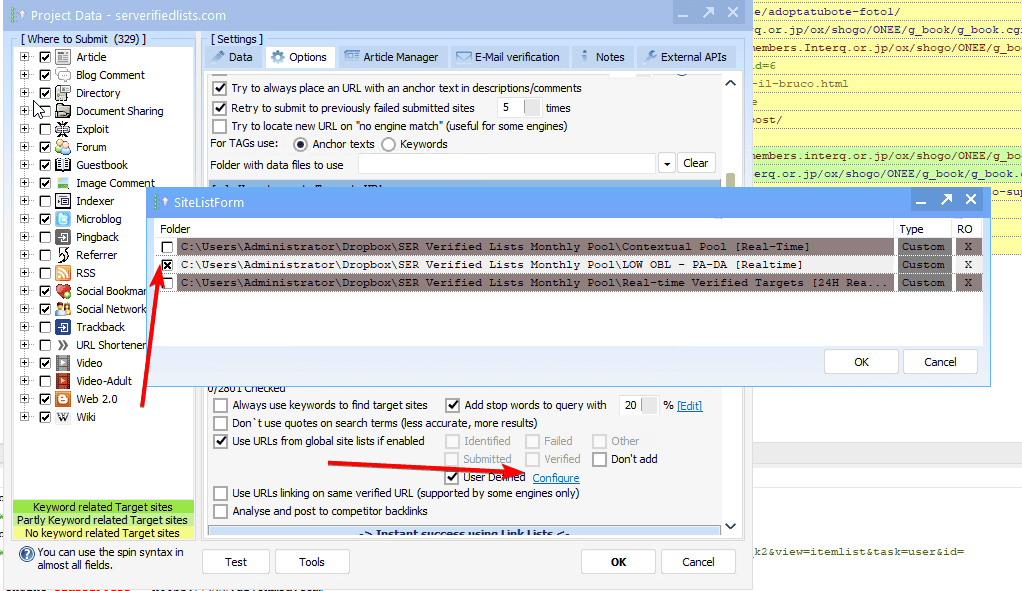
- Open GSA SER and navigate to the global site list manager – click the "Options" menu, then select "Global site lists".
- Import and de-duplicate – use the "Import" button, point to your file, and choose the appropriate category (e.g., Article, Social Bookmark). Enable the duplicate removal filter.
- Pre-verify if possible – on the same screen, use the "Check/verify" function to filter out immediate duds. This step runs basic connectivity tests.
- Set engine-specific filters – in project settings, assign the newly populated list to your active engines and adjust thread counts accordingly.
Sourcing a Reliable GSA SER Global Site List
Finding a trustworthy list can be challenging. Public freebies often circulate for years and contain mostly dead links. Premium sources generally offer better freshness, but due diligence is required. The most reliable pools emerge from:
- Dedicated SEO marketplaces that specialize in GSA tools
- Active, private member forums where users exchange verified target sets
- Self-compiled lists built through advanced footprint harvesting and month-long verification cycles
Regardless of the source, always inspect a list before deployment. A raw file should not contain broken URLs, domains serving 404 errors, or sites that redirect to unrelated landing pages. Many experienced users merge multiple niche lists into one super-list and then run a thorough verification using GSA SER’s built-in test engine.
Pro Tips for Maintaining Your List
- Schedule a weekly integrity check – use a secondary installation to verify URLs without affecting live campaigns.
- Combine with custom scraped targets – let GSA SER harvest new sites from search engines overnight and merge fresh finds after verification.
- Separate by success likelihood – tier your lists into “high success,†“medium,†and “exploratory†buckets to prioritize fast submissions.
- Watch for platform deprecations – when a popular Web 2.0 platform shuts down, remove all its footprints immediately to avoid wasted threads.
Frequently Asked Questions
Is the GSA SER global site list updated automatically?
No. The software does not ship with an auto-updating master list. Any GSA SER global site list you use must be manually imported and refreshed by the user. Some premium subscriptions deliver periodic updates, but the tool itself relies on the list you provide.
How many sites does an average high-quality list contain?
Sizes vary dramatically. A modest, hand-verified list may hold 20,000–50,000 targets and still outperform a raw 500,000-entry dump. Top-tier compiled lists often sit between 100,000 and 300,000 verified URLs, covering dozens of engine types. Volume is less critical than freshness.
Can I use a free global site list?
Yes, but expect significant fallout. Free lists usually contain 60–80% dead or uncooperative sites. They work for testing and low-priority tiers, but for a production campaign a commercial or privately shared GSA SER global site list pays for itself through saved proxies and faster indexing.
What is the difference between an identified and a verified list?
An check here identified list contains URLs that match GSA SER’s footprints but have never been tested for successful account creation or link placement. A verified list has undergone at least one successful submission cycle and therefore yields higher instant success rates. Blending both gives you depth and reliability.
How often should I replace my global site list?
This depends on campaign intensity. If you run 24/7 with thousands of threads, sites will burn out. A monthly refresh is a safe baseline. Frequent verification of the existing list can extend its lifespan, but you should still merge new targets bi-weekly to maintain momentum.
Where can I safely store my custom lists?
Keep local backups but also store copies in cloud folders. Versioning is important—label files with the date and verification status (e.g., “Global_Verified_2025-02-10.txtâ€). This makes it easy to revert if a new import corrupts your setup.